

The personal injury attorneys at Bishop Law Firm represent victims injured in motor vehicle accidents. We don’t get paid unless we win (on a contingent fee basis). We also provide case reviews.
Start your free case review online today or call us at (919) 615-3095.
What does a car accident lawyer do?
If you’re wondering what a car accident lawyer can do for your injury claim, or if you even need to hire legal representation, we’ve got some food for thought.
Car accident attorneys understand the law and what compensation victims are entitled to receive.
Having this knowledge can help car accident victims recover the compensation they are entitled to under the law, not just what the insurance company told them they would pay.
Car accident attorneys understand relevant personal injury law.
Here are five relevant laws in North Carolina that may affect a victim’s personal injury claim.
1. North Carolina drivers are responsible
North Carolina drivers have a duty to other drivers and pedestrians to operate their vehicles reasonably to avoid injuring others.
A rational driver will obey traffic rules and drive safely.
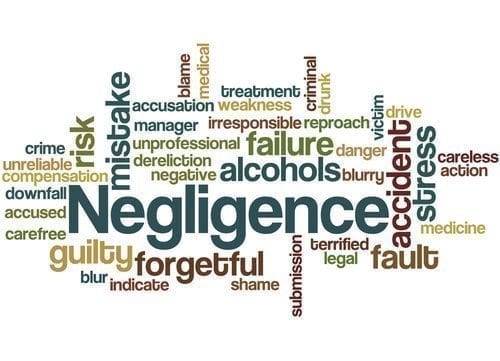
If a driver breaches this duty (negligently) and causes a car accident that results in injuries to the victim, the injured party can make a claim against the at-fault driver and their car insurance (if they did not cause the accident in any way).
See Also: Do I Have a North Carolina Car Accident Injury Case?
2. The victim must not be at fault
North Carolina is one of four states residual contributionNegligence states (along with Alabama, Maryland, and Virginia).
This means that car accident victims cannot be at fault when it comes to compensation for car accident injuries.
For example, if a car accident occurs because the at-fault party ran a light and the victim also ran a red light, the victim may not be able to recover damages due to his negligence.
Contributory negligence can often lead to unfair outcomes for victims, but it is the law in our state.
An exception to contributory negligence is the “last obvious chance doctrine.”
The Last Chance Doctrine can help victims if the at-fault party has a last chance to change course and avoid harm.
Also Read What Not to Do After a Car Accident in Raleigh.
3. Proof of liability in car accident cases
After a car accident, at the scene of the accident, police will often cite the at-fault party at the bottom of the second page of the accident or police report and include a description of the accident.
Of course, correcting accident reports is a challenge.
In some cases, no one receives a ticket, but it's still clear who is at fault.
In other unfortunate cases, it is difficult to determine who is at fault, which often results in arbitration of property damage claims and litigation seeking compensation for injuries.
Reviewing police reports and obtaining the opinions of accident reconstruction experts to prove liability are tasks that a car accident attorney can help victims accomplish.
Also read Raleigh Car Accident Reports and Twenty Steps to Take After a Raleigh Car Accident.
If you were injured in a motor vehicle accident at work, you may have a North Carolina workers’ compensation case as well as a car accident claim.
4. North Carolina Statute of Limitations
How soon after a car accident can I file a lawsuit in North Carolina? The NC statute of limitations is three years from the date of injury.
If your loved one is killed in a car accident, you have two years from the date of death to file a lawsuit.
5. What compensation can a car accident victim receive?
If you were injured in a car accident through no fault of your own, you may be compensated for lost workday costs, medical bills, pain and suffering, and, in some cases, punitive damages.
If necessary, ongoing medical treatment, future medical expenses, and lost wages should also be included.
Pain and Suffering (Non-Economic Loss) Trying to Compensate Car Accident Victims The physical pain and mental anguish the victim must endure as a result of this Injuried They kept at it.
If you break your leg, you will not only experience physical pain, but also mental and spiritual pain. emotional distress.
Unfortunately, injuries can leave us with scars and affect our self-esteem.
You may suffer from depression, car phobia, anxiety, or post traumatic stress disorder after you Injuried. this is pain and suffering damage Trying to make it up to you.
Punitive damages are intended to punish the at-fault party for serious misconduct.
A drunk driver who injures another person while driving may be liable for punitive damages.
However, simply causing an accident due to distracted driving may not be enough to qualify as “gross negligence.”
Also Read Raleigh Car Accident Injuries
add value
Simply hiring a car accident attorney can increase the value of your claim because hiring an attorney increases the chances of your case being litigated.
Personal injury lawsuits are expensive and most insurance companies want to avoid them. To avoid litigation costs, insurance companies may offer more financial compensation.
When trying to increase the value of your claim, a Raleigh car accident attorney will:
Dealing with Insurance Companies – A car accident attorney can help you deal with the claims adjuster and the opposing attorney if you file a lawsuit.
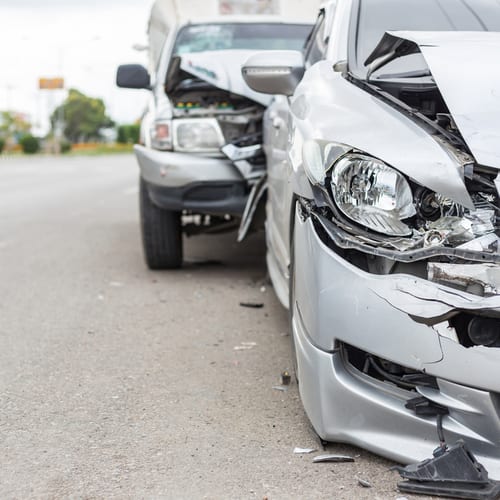
Dealing with insurance companies can be tricky. You need to give them enough information for them to pay your claim, but not so much that it gives them ammunition against you.
Additionally, the insurance adjuster will need evidence to pay your claim.
Before providing evidence to an adjuster, the injured party needs to know what the evidence contains so that they can resolve any issues that may arise later.
Dealing with opposing counsel is definitely a task for your car accident lawyer.
Gather necessary evidence

A car accident attorney can also gather all the evidence you need to prove your serious injuries and their consequences to an insurance adjuster or jury.
Medical records and bills (depending on the health care provider) may require specific releases to obtain the documents, and billing requests may be sent to an entirely separate entity.
However, you must consider all losses to receive fair compensation.
Liens must be paid off in North Carolina. Just saying you don't know them won't work.
A Raleigh car accident attorney can find out if the provider is entitled to a lien, whether they perfected the lien, and ensure that all charges on the lien are related to your accident.
The evidence required in a car accident case varies from case to case.
The at-fault party’s driving record, news reports about the accident, evidence of criminal charges against the at-fault party, photos everythingopinions from accident reconstruction experts, traffic camera footage, medical bills for future serious injuries, lost wages, and a map of the accident location are just some of the things a victim may need to receive maximum compensation.
Investigate your claim and the parties involved
A Raleigh car accident attorney will review your accident to determine how the at-fault party’s negligence contributed to your injuries.
Accidents require a step-by-step investigation to ensure causation can be proven when negotiating with insurance companies or presenting evidence to a jury.
Unfortunately, there are drivers on the road who shouldn't be there.
They may have been told by a doctor not to drive, or they may even have had their license revoked for drunk driving. They may be fugitives and the car they were traveling in was stolen.
Your attorney can help you obtain information about the at-fault party.
If the at-fault party has a history of such conduct leading up to your accident, and the conduct exceeds the scope of ordinary negligence, you may be able to claim punitive damages, but you won’t know this until you research the parties involved in the case.
Negotiate with insurance companies on your behalf
At our firm, we file demands with insurance adjusters for a fair settlement.
The request contains information that the insurance adjuster can use to complete a review of your claim in the insurance software (i.e., Colossus).
After giving the adjuster time to review, we begin negotiating the car accident claim.
Negotiation is not for the faint of heart. After a while, most people become frustrated with the dialogue on both sides and wish the process could move faster.
This desire to move quickly should not be indulged.
Any indication to the at-fault party’s insurance adjuster that you “just want this to be over” or “need cash now” will reduce your settlement amount.
Negotiating at pace and diligently, and providing evidence to support the amount you are asking for, may result in a higher settlement amount.
A Raleigh car accident attorney can help.
Negotiate with your lienholder/medical provider.
In a car accident injury case, you must negotiate with the at-fault party’s insurance company, and you may also have to deal with your own insurance/medical providers/lien holders.
These negotiations are critical to how much money victims receive.
As we discussed before, even failed negotiations to reduce your bill are better than no negotiations at all.
A Raleigh car accident attorney can contact everyone you owe as a result of your injuries and try to prorate your bill, leaving you with more money in your pocket.

Do you need a car accident lawyer?
If you were injured in a car accident through no fault of your own, you should seek legal representation.
As mentioned above, a car accident attorney can help increase the value of your claim by investigating and gathering evidence and negotiating with insurance companies on your behalf.
Additionally, even with the best car accident attorney, some insurance companies will not provide a fair quote unless a lawsuit is filed.
Litigation is definitely a chore that a lawyer should help you handle.
A car accident attorney can anticipate and resolve legal issues you may not be aware of at the time of your claim.
The attorney you retain after a car accident, truck accident, or other motor vehicle accident will set the tone for how you will be treated by the at-fault party’s insurance company.
If you were injured in a car accident through no fault of your own, the car accident attorneys at Bishop Law Firm can help.
We offer a free car accident case review and there is no charge unless you win your case. Contact us today at 919-615-3095 or start a free case review online.
Also Read: North Carolina Car Accident Lawyers


